
Dentist in Vienna, VA
 For seniors, it is imperative that gum health is a top priority. As you age, your risk of developing periodontal (gum) disease increases. Periodontal disease is both preventable, and in many cases, reversible. When left untreated, it can lead to more serious complications such as bloody or swollen gums, and even tooth loss. Even more alarming are the numerous studies connecting periodontal disease to other serious illnesses. Here’s what you need to know about gum health as you age.
Periodontal Disease and Your Overall Health
Periodontal disease has been linked to serious health issues. In fact, a recent study conducted by the University of Southampton and King’s College London uncovered a link between periodontal disease and an increase in the rate of cognitive decline in those who suffer from early Alzheimer’s disease. In patients with periodontal disease, the study found cognitive decline underwent a rapid change, occurring six times as fast on average. Periodontal disease has also been found to increase your risk of developing heart disease or having a stroke. Risk factors for these serious issues increase with age, among other causes, and it is especially important to limit potential risk factors where possible. This can be as easy as improving your gum health with a visit to our office.
The Numbers You Need to Know
According to the National Institute of Dental and Craniofacial Research, moderate or severe periodontal disease was found in over 14% of seniors aged 65 to 74. The number increases to more than 20% for those over 75 years of age. Men were found to be more likely than women to have moderate to severe periodontal disease. Smoking was also found to have a significant impact. The same study showed 32% of current smokers had periodontal disease, compared to 14% for those who never smoked.
Steps You Can Take
As you age, it is essential to keep up with your gum health. Doing so is an important link in lowering your risk factors for other serious ailments such as heart disease, stroke, and the impacts of Alzheimer’s disease. You can keep your gums healthy by brushing twice each day for a full two minutes. Be sure to regularly floss your teeth as well. Flossing is an effective way to clean the hard-to-reach cracks and gaps where plaque builds up. Schedule a visit with our team for a complete gum evaluation. We can work with you to devise a course of action to ensure healthy gums.
 Loose teeth, bad breath, and painful, bloody gums – these are among the signs and symptoms of periodontal, or gum, disease. Unfortunately, periodontal disease can also begin without any obvious symptoms. If left undiagnosed or untreated, you could be at risk for irreparable damage to your teeth and gums. The good news is that periodontal disease is preventable. In fact, one of the most effective tools for preventing the disease only takes a minute of your time each day.
 When you are traveling, it can be challenging to keep up with your usual daily routine. For many people, this can include having difficulty finding the time to properly brush and floss. Whether you are traveling for business or pleasure, we have gathered a few helpful tips to help you stay on track with your oral health while you are away from home.
 Taking care of your dentures can seem like an added chore. Don’t worry, with a little effort your dentures can stay clean. Here are 5 tips for keeping your dentures clean and your smile healthy.
 Your gum health may have an impact on your cognitive function. One recent study found a correlation between gum disease and increased cognitive decline for people living with early stages of Alzheimer’s disease. While more studies are needed to make a definitive connection, this study illustrates the importance of continuing the conversation about oral health and its impact on your entire body.
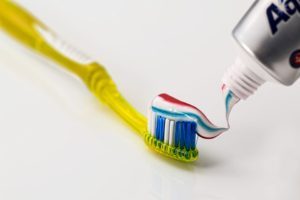 Many people may be surprised to learn that they have been brushing their teeth incorrectly for years. Improper brushing may cause oral health complications, including tooth enamel erosion and periodontal disease. Learn how to brush your teeth correctly and you can protect them for years to come.
 Chewing and smoking tobacco are known to cause severe health problems, particularly in the lungs. But the risks to your mouth and teeth can be just as extensive and alarming. If you use tobacco, stop. Here’s what tobacco can do to your oral health.
 Our dentist might suggest dental sealants for your child during a visit to our office. Sealants are a way to protect your teeth against decay. With any dental treatment, it helps to understand the procedure and how it can impact your child’s oral health.
 When you are close to someone you can often be overly comfortable in sharing. This is especially true with kissing. In one kiss, more than 500 germs can be shared between two people. Sharing a kiss can have an impact on your oral health. Here are some of the dangers of kissing.
 Wisdom teeth are the last new teeth that will enter your mouth. Most patients have some form of complications resulting from their wisdom teeth. Did you know that your wisdom teeth can impact your overall health? Here’s what you need to be aware of regarding your wisdom teeth.